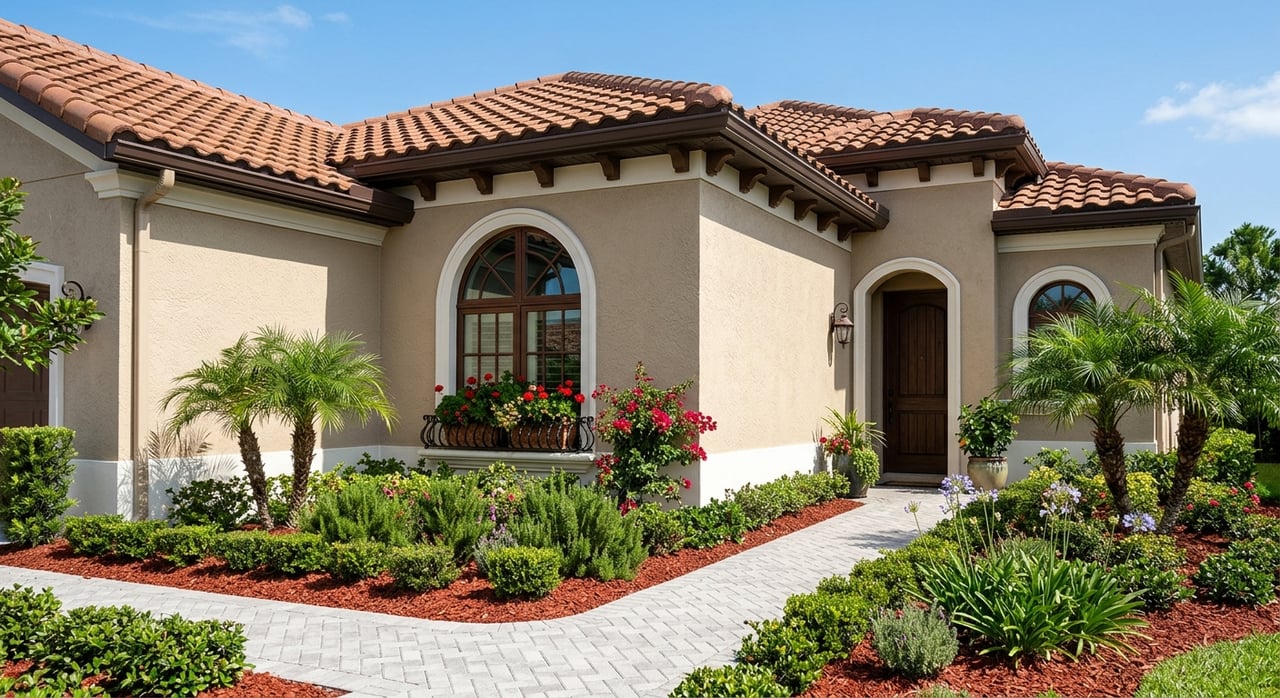
How to Sell a Home in PGA Village at the Right Price
May 21, 2026
May 21, 2026
Wondering why one PGA Village home gets attention quickly while another sits, even when they seem similar? In today’s market, pricing is less about guesswork and more about precision. If you are thinking about selling in PGA Village, this guide will help you understand what drives value, what can throw pricing off, and how to position your home competitively from the start. Let’s dive in.
One of the biggest pricing mistakes sellers make is treating PGA Village like one simple market. It is a gated, golf-centered community made up of multiple sub-associations, with condos, villas, single-family homes, and estate properties all in the mix. That means your home is usually best priced against the smallest practical micro-market, not against all of Port St. Lucie or even all of PGA Village.
In other words, a single-family home in one section should not automatically be compared to a villa or condo in another. Even homes that look close on a map can perform differently depending on property type, setting, and association structure. In PGA Village, the details matter.
The broader pricing backdrop gives useful context, but it should not replace neighborhood-specific comps. Recent local data in the 34986 area showed a median sale price around $389,000 for single-family homes, with 93.5% of original list price received, 91 days to contract, and 5.2 months of supply. Other recent data points showed a median listing price of $399,900 and a median sold price of $395,000.
St. Lucie County single-family data for April 2026 also pointed to a similar pattern, with a median sale price of $388,057, 95% of original list price received, 48 days to contract, 90 days to sale, and 5.2 months of inventory. That inventory level sits near the balance zone, which means buyers still have choices. For you as a seller, that makes realistic pricing important from day one.
In a market with about five to six months of supply, pricing high and planning to reduce later can work against you. Buyers are comparing options carefully, and homes that start too high can lose momentum while newer listings enter the market. In PGA Village, where buyers often compare lifestyle features closely, your home needs to make sense on paper before it earns a showing.
This is especially true because contract times are measured in weeks, not days. If your price is not supported by recent comparable sales, buyers may wait, skip your home, or expect a reduction. A strong opening price can help you avoid that slow start.
A credible pricing strategy in PGA Village should stay as local and as specific as possible. The strongest comparison set usually includes the same property type, similar size and age, a similar view orientation, and ideally the same sub-association or at least the same gate. That is how you build a price that reflects how buyers and appraisers are likely to view your home.
Using broad Port St. Lucie numbers can create the wrong expectation. Averages can be helpful for context, but they are not a substitute for recent closed sales that truly match your home. Precision beats optimism in this kind of market.
Closed sales tend to carry the most weight because they show what buyers were actually willing to pay. Active listings matter too, since they represent your competition, but they do not prove value on their own. Pending sales can also offer clues, especially if very few recent closings exist in your section.
If you are selling in a segmented community like PGA Village, one or two misleading comps can distort the entire pricing picture. That is why local, recent, and highly similar sales matter so much.
If your home is a condo or townhome, you should not use single-family pricing logic. In April 2026, St. Lucie County condo-townhomes had a 9.2-month supply and a 16.9% year-over-year price drop. By comparison, single-family homes were sitting at 5.2 months of supply.
That difference is important. A softer condo and townhome market means buyers may have more leverage and more choices. If your property falls into that category, the pricing strategy may need to be more conservative than it would be for a single-family home.
Golf frontage, water views, and quieter interior locations can absolutely influence value in PGA Village. But sellers should be careful not to assume those features always create an automatic premium. A higher price still needs support from similar homes with similar view and location advantages.
For example, a golf-view property may deserve a stronger price than an interior lot, but only if the comparable sales show buyers actually paid more for that difference. Without that support, the premium may be hard to defend during negotiations or appraisal.
Updated kitchens, baths, flooring, roofing, and well-maintained systems can improve your home’s appeal and marketability. Condition matters in both buyer decision-making and appraisal review. Deferred maintenance can also pull your value down, even if your location is strong.
That said, not every renovation adds full dollar-for-dollar return. A beautiful remodel may help your home stand out, but the market still sets the ceiling. The key is to price improvements according to what similar upgraded homes have actually achieved.
Before listing, it helps to gather a simple file with the details that support your price. Useful items may include:
This kind of preparation helps explain why your home should be priced above, below, or in line with the neighborhood median. It also gives buyers and appraisers a clearer picture of your property.
In PGA Village, pricing is not just about the home itself. The community’s association structure also plays a role in affordability. The POA maintains items such as roadways, signs, common areas, lakes and wetlands, access control, gate houses, and Island Club amenities, while sub-associations manage their own common areas.
For buyers, those obligations are part of the monthly ownership picture. For sellers, that means fees and responsibilities should be considered in the pricing strategy. If two similar homes have different recurring costs or different maintenance structures, buyers may not value them the same way.
Even with the right pricing strategy, timing can influence your result. National 2026 seller research identified the week of April 12 through 18 as the strongest listing window, with homes getting 16.7% more views than the average week and selling about nine days faster. In Florida, spring 2026 also opened with more closed sales, more pending sales, and higher inventory statewide.
That combination matters in PGA Village. Listing earlier in the spring may help you get ahead of added competition, especially in a market where inventory can build. Since the community includes both year-round and seasonal residents, activity can also shift with the calendar.
A few mistakes show up often when sellers price homes in this community:
Each of these can make your listing less competitive. The better path is to build a price from recent, similar sales and then adjust carefully for condition, view, association structure, and timing.
In today’s PGA Village market, smart pricing is both local and realistic. It starts with recent comparable sales that closely match your home, then accounts for the features that truly set your property apart. It also respects the fact that buyers have options and are paying attention to value.
If you are preparing to sell, the goal is not just to pick a number that feels good. The goal is to choose a price that attracts serious buyers, holds up under scrutiny, and gives your home the best chance to move without unnecessary delay. In PGA Village, careful pricing is one of the strongest tools you have.
If you want a pricing strategy built around your section, property type, and current competition, Annmarie Napolitano can help you evaluate your home with local insight and a relationship-first approach.
Stay up to date on the latest real estate trends.
More than transactions—we offer experienced leadership, collaborative support, and a commitment to lasting relationships rooted in trust and local expertise.