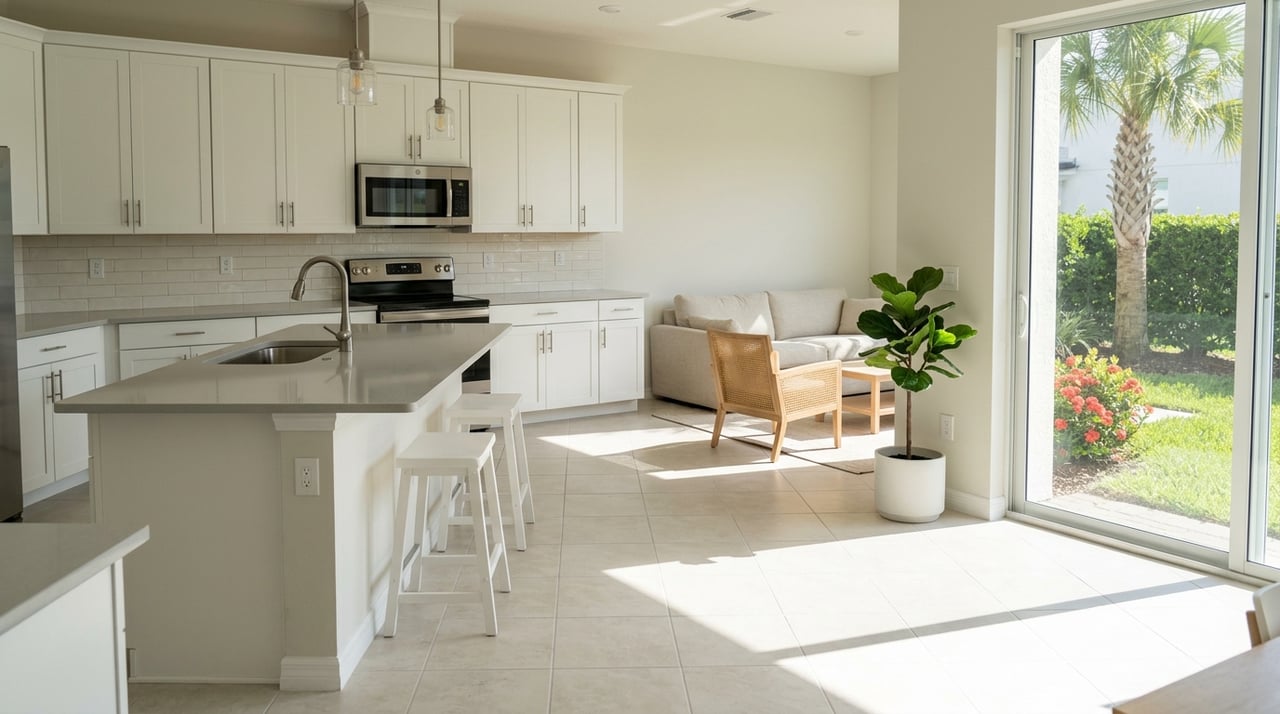
How to List Your St Lucie West Home Step by Step
May 7, 2026
May 7, 2026
Thinking about listing your St. Lucie West home? You are not just selling a house. You are also navigating a master-planned community setting where pricing, presentation, disclosures, and association details can all shape your result. This guide walks you through each step so you can feel more prepared, avoid common delays, and launch your home with confidence. Let’s dive in.
St. Lucie West has its own rhythm, and that matters when you list. The St. Lucie West Services District describes the area as a master-planned Community Development District established in 1990 that serves about 7,000 water consumers across 4,600 acres. It manages utilities, wastewater, reclaimed irrigation water, stormwater, preserves, and non-ad valorem assessments.
For you as a seller, that means your home may come with community-specific details that buyers will want to understand early. In many parts of St. Lucie West, association rules, fees, approvals, and access procedures are part of the selling process, not an afterthought.
The broader St. Lucie County market also gives useful context for pricing and timing. In March 2026, the single-family median sale price was $407,000, with 2,403 active listings, 5.2 months of inventory, and a median time to sale of 93 days. That kind of market still rewards homes that are priced well and presented well.
One of the biggest mistakes sellers make is assuming any listing will attract strong offers if inventory is tight enough. In St. Lucie County, 5.2 months of inventory and a 93-day median time to sale suggest buyers still have options. Your pricing strategy needs to reflect current competition, condition, and buyer expectations.
In St. Lucie West, buyers often compare homes not just by square footage and upgrades, but also by community setup. HOA structure, assessments, amenities, and gate access can all affect how your home is viewed next to other listings.
A smart pricing conversation should look at recent comparable sales, current active competition, and your home’s presentation level. If your home enters the market too high, you risk missing the strongest wave of early attention.
Selling in Florida starts with disclosure and documentation. If you prepare these items early, you reduce stress once a buyer shows interest and help avoid delays after you go under contract.
Florida sellers have a duty to disclose known facts that materially affect value and are not readily observable to the buyer. This standard comes from Florida law as summarized by The Florida Bar’s discussion of Johnson v. Davis. In simple terms, if you know about a serious issue and a buyer would not easily see it, it needs to be disclosed.
You should also be ready for Florida’s required property tax disclosure summary. This must be provided at or before contract execution, and it warns buyers not to rely on the current tax amount because a sale or improvements can trigger reassessment.
Florida also requires a flood disclosure at or before contract execution. The statutory form makes clear that homeowners insurance does not cover flood damage and asks about prior flood claims and flood assistance.
If there are known defects in a sanitary sewer lateral, those must be disclosed before contract execution as well. And if your home was built before 1978, the federal lead-based paint disclosure form is required.
This is where St. Lucie West often differs from a more typical resale. Because many homes are in association-managed or gated communities, you may need extra documents and extra coordination before a smooth sale can happen.
For example, communities such as Lake Forest at St. Lucie West maintain lease and resale information along with rules and community documents. That is a reminder that buyers may need clear information about approvals, restrictions, or procedures before closing.
One especially important item is the estoppel certificate. In Florida, the association must issue this within 10 business days of receiving a request. The certificate generally stays effective for 30 days if delivered electronically or by hand, and 35 days if mailed.
That certificate can reveal assessments, violations, transfer approval issues, and right-of-first-refusal questions. If this is handled too late, it can create a closing bottleneck. In St. Lucie West, it is smart to plan for this early instead of waiting until the last minute.
Before your home hits the market, think of it like a product launch. Buyers often form their first impression online, and your photos need to do the heavy lifting before anyone schedules a showing.
Research from the National Association of REALTORS® found that 83% of buyers’ agents said staging made it easier for buyers to visualize a property. The same research found that 49% of sellers’ agents said staging reduced time on market.
The most common pre-listing recommendations were straightforward but powerful:
For a St. Lucie West home, it helps to focus on the spaces buyers notice first in photos and tours. Usually that means the entry, kitchen, main living areas, primary bedroom, and outdoor living spaces.
You do not always need a full redesign to make a strong impression. Often, the best results come from removing visual clutter, addressing obvious maintenance items, and making the home feel bright, open, and well cared for.
The first few days on the market matter more than many sellers realize. That early window can influence how much attention your listing gets and whether buyers feel urgency or hesitation.
According to NAR, 52% of buyers found the home they purchased online. NAR also reported that 81% of buyers rated listing photos as the most useful feature during their online search.
That means your launch package should be complete from day one, not pieced together over time. Strong photography, a clear description, and accurate community details all help buyers decide whether your home is worth a closer look.
In St. Lucie West, community details can be especially important. Buyers may want to know whether the home is in an HOA, whether access is gated, and whether there are fees, assessments, or showing instructions they should understand before visiting.
NAR also found that buyers’ agents considered these listing features highly important:
A polished launch gives your home a better chance to generate early views, saves, and shares. That momentum can make a real difference.
Showings in St. Lucie West can require more coordination than in an open-access neighborhood. If your home is in a gated community, gate entry procedures and visitor rules should be confirmed before the first appointment is scheduled.
That sounds simple, but it can affect the buyer experience. If a buyer or agent has trouble getting through the gate or does not understand the showing process, your home can lose momentum before the tour even begins.
It also helps to keep the home consistently ready. A clean, well-lit, uncluttered home gives you more flexibility when showing requests come in on short notice.
The highest price is not always the strongest offer. When offers come in, you should also look at financing, contingencies, timing, and the buyer’s ability to work within any community or HOA process.
In a market where homes may take time to sell, a clean and well-supported offer can be very valuable. If your buyer has a realistic timeline and the paperwork is moving smoothly, that can reduce your risk of delays later.
This is another reason preparation matters so much. When your disclosures, community details, and estoppel planning are already in motion, it is easier to move from accepted offer to closing.
Once you are under contract, the process shifts from marketing to execution. At this point, closing depends on many moving parts happening on time.
For St. Lucie West sellers, one of the most important tasks is managing HOA-related items within the right timeline. Since the estoppel certificate has a limited effective period, it needs to be requested and used carefully to avoid expiration before closing.
You should also expect the transaction to involve several workstreams at once, including disclosures, title or escrow coordination, showing follow-up if backup interest matters, and any community-required documents. That is why a process-driven approach can make the experience feel much more manageable.
As a planning benchmark, the March 2026 median time to sale for St. Lucie County single-family homes was 93 days. Your home may move faster or slower based on price, condition, financing, and HOA timing, but a roughly three-month window from list to closing is a reasonable starting point.
In many markets, selling is mostly about pricing and presentation. In St. Lucie West, it is often about pricing, presentation, and community administration.
Because the area includes master-planned and association-driven communities, your sale may involve gate access, resale documents, assessment information, estoppel timing, and buyer education about the neighborhood structure. That does not have to make the process harder, but it does mean preparation matters.
When your home is priced thoughtfully, presented professionally, and supported by the right paperwork, you put yourself in a stronger position from the start. That kind of preparation helps you reduce surprises and move toward closing with more confidence.
If you are getting ready to list in St. Lucie West, working with a local team that understands both the marketing side and the community details can make the process smoother. When you are ready to take the next step, Annmarie Napolitano can help you plan your sale with clear guidance, professional presentation, and local insight.
Stay up to date on the latest real estate trends.
More than transactions—we offer experienced leadership, collaborative support, and a commitment to lasting relationships rooted in trust and local expertise.