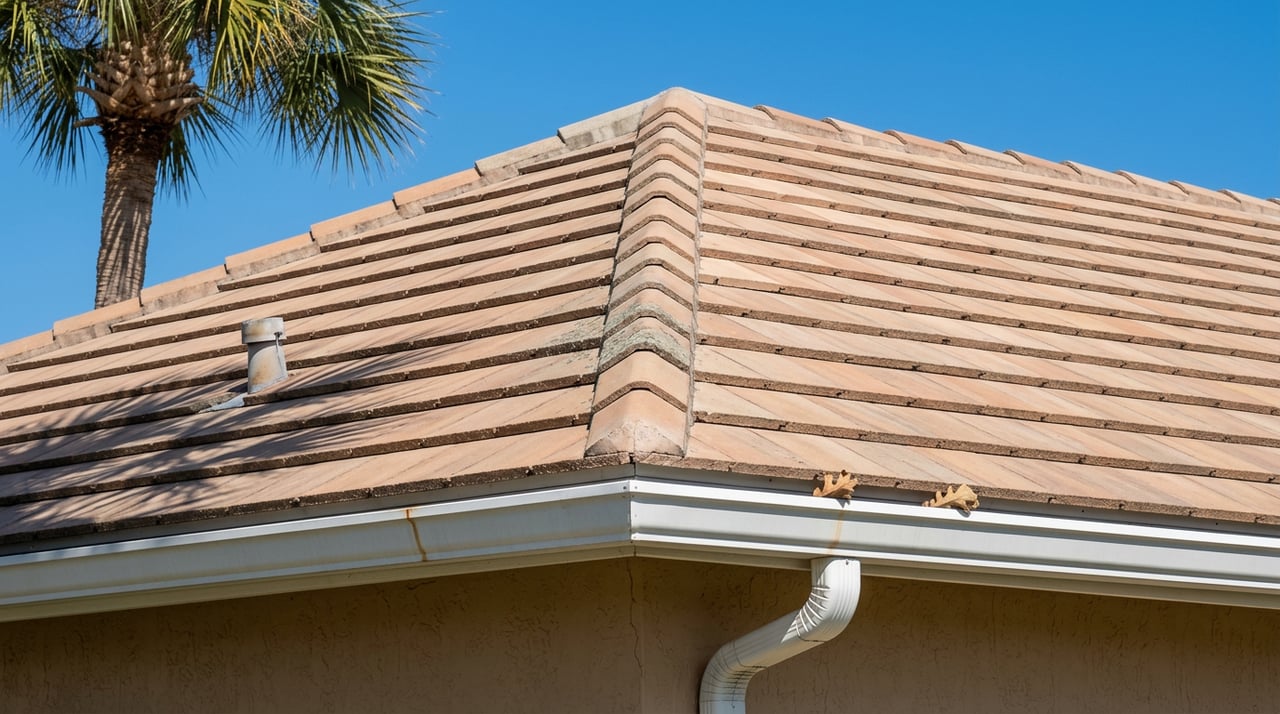
The Roof-Age Insurance Rule Every St. Lucie West Seller Should Get Right in 2026
August 13, 2026
August 13, 2026
A lot of homeowners in St. Lucie West spent this spring believing Tallahassee had fixed the roof-age insurance problem. It didn't. Two bills that would have stopped insurers from refusing to renew a policy based on roof age alone, Senate Bill 808 and its identical House companion, HB 815, both died in committee on March 13, 2026. Neither became law. If you're planning to list a home here this year, that correction matters less than what it reveals underneath it: the roof-age squeeze doesn't touch every seller in St. Lucie West the same way, and the difference has nothing to do with age at all.
The pitch behind SB 808 was straightforward. It would have widened the existing roof-age protection beyond standard homeowner policies to cover all residential property insurance, including condo associations and landlords, and it would have let more types of professionals, including roof consultants and observers, sign off on a roof's remaining life. Both bills carried a July 1, 2026 effective date if they'd passed. They didn't get that far. HB 815's own Senate record lists its last action as dying in the House Insurance & Banking Subcommittee.
So as of this August, nothing new is protecting Florida homeowners from roof-age non-renewals. What's protecting them is what was already on the books.
Florida Statute 627.7011, the product of the 2022 and 2023 insurance reforms, is the rule that governs every roof-age conversation in St. Lucie West today. It says an insurer cannot refuse to issue or renew a policy solely because a roof is under 15 years old. Once a roof crosses that 15-year line, the insurer can require an inspection, but if a licensed inspector certifies at least five years of remaining useful life, the carrier still can't decline coverage on age alone. That's the entire protection. It's condition-based, it's inspection-dependent, and it puts the burden of proof on the homeowner to get that inspection done and documented.
None of that explains why one seller in St. Lucie West can list a 22-year-old roof without a second thought, while a seller two streets over is staring at a non-renewal letter for a roof the same age. That split runs along a line most guides to this neighborhood skip entirely: who technically owns the roof.
St. Lucie West isn't one housing product wearing one insurance risk. The neighborhood's original DiVosta-built sections, The Lakes at St. Lucie West and its companion community Sun Terrace, went up between 1980 and 1994 and total 568 attached and single-family homes across the two subdivisions. Resale listings for these communities show the homeowners association carrying building insurance as part of the monthly maintenance fee, alongside cable, internet, and exterior upkeep. The roof-age fight, when it happens, plays out between the association and its carrier, not between an individual seller and theirs. Other maintenance-inclusive 55+ communities in the neighborhood, such as Kings Isle, bundle roof cleaning and periodic exterior painting into the HOA fee the same way, though the insurance structure varies by community and is worth confirming before you assume it matches Sun Terrace.
Compare that to the neighborhood's detached single-family sections: Torino, whose Winterlakes section was built by Maronda Homes, along with Lake Forest Pointe and Country Club Estates/Fairway Isles on the PGA golf corridor. In these communities, the roof belongs to the individual owner. Its age shows up on that owner's personal policy, in that owner's MLS remarks, and in that owner's disclosure paperwork. There's no association standing between the homeowner and a carrier's underwriting decision.
| Attached/HOA-insured (Sun Terrace, The Lakes) | Detached single-family (Torino, Lake Forest Pointe, Country Club Estates) | |
|---|---|---|
| Who insures the roof | Association master policy | Individual homeowner policy |
| Where roof age surfaces | Association renewal, reflected in HOA fee | Seller's own policy and disclosure |
| Seller's exposure at listing | Indirect, through fee trends | Direct, through insurability |
| What a buyer's lender asks about | Association's insurance standing | Roof age, condition, inspection reports |
A villa roof in Sun Terrace is the association's underwriting problem. A single-family roof in Torino is the seller's.
The reason this split matters right now, and not just as an abstract structural fact, is what's happening to the carrier landscape underneath it. Citizens Property Insurance's own county-level reports show St. Lucie County personal residential policies falling from 15,832 at year-end 2024 to 4,955 at year-end 2025 to 3,049 as of May 31, 2026, a decline of roughly 81 percent in seventeen months as private carriers took policies out of Citizens through the state's depopulation process. At the same time, Citizens' board-approved 2026 rate filing from December 2025 called for a nearly 6 percent increase for St. Lucie County, the highest proposed increase anywhere in the state, while neighboring Martin and Indian River counties saw proposed changes under 1 percent.
Put those two facts together and the picture for a single-family seller in St. Lucie West gets specific. A policy that sat comfortably with Citizens for years is now more likely to land with a private carrier that applies its own, often stricter, roof-age underwriting the moment the policy transfers. That's a live risk for a detached home in Torino or Country Club Estates. It's mostly irrelevant to a villa owner in Sun Terrace, whose roof insurance is negotiated at the association level regardless of which individual carrier holds the master policy.
None of this is a reason to hold off on listing. It's a reason to know, before a buyer's agent finds out for you, exactly which category your home falls into and what paperwork closes the gap.
Does a new roof automatically lower my insurance premium in St. Lucie West? Not on its own. The wind mitigation inspection is what documents the credit and gets it applied. A new roof without that paperwork on file often leaves the discount unclaimed.
Do villa owners in HOA-insured communities need to think about roof age at all? The building's master policy is where roof age gets underwritten, not the individual unit sale. Rising association insurance costs still show up over time in the monthly maintenance fee, but the sale itself doesn't hinge on the roof's age the way a single-family closing does.
If my roof is under 15 years old, am I fully covered either way? Under 627.7011, an insurer can't decline you solely for age under 15 years. They can still decline or adjust coverage for documented damage or condition issues found on inspection, so age protection isn't the same as a clean bill of health.
If you're weighing when to list a single-family home in St. Lucie West, or you're trying to figure out which insurance category your specific address falls into before a buyer's lender does it for you, that's the kind of groundwork Team Napolitano walks sellers through before a sign ever goes in the yard. Request a Free Home Valuation and we'll talk through what your roof, your community structure, and this year's market actually mean for your listing.
Stay up to date on the latest real estate trends.

More than transactions—we offer experienced leadership, collaborative support, and a commitment to lasting relationships rooted in trust and local expertise.